In today’s fast-paced world, it’s easy to get caught up in the whirlwind of daily activities, leaving us feeling stressed and exhausted by the end of the day. A transformative evening yoga sequence can serve as a powerful tool to unwind, restore balance, and prepare the body and mind for a restful night’s sleep. This article will guide you through a comprehensive evening yoga routine designed to promote deep relaxation, rejuvenation, and well-being.
The Importance of Evening Yoga
Practicing yoga in the evening offers numerous benefits that cater specifically to the winding down process. Not only does it help in releasing the tension accumulated throughout the day, but it also aids in calming the nervous system, facilitating a transition into restfulness. Evening yoga can help in:
- Reducing stress and anxiety.
- Improving sleep quality.
- Enhancing mental clarity and focus.
- Promoting emotional balance.
- Supporting physical relaxation and flexibility.
Setting the Scene for Relaxation
To maximize the benefits of your evening yoga practice, it’s essential to create a serene environment. Here are a few tips to set the perfect atmosphere:
- Dim the Lights: Lowering the light levels helps signal your body that it’s time to relax and prepare for sleep.
- Aromatherapy: Use calming scents like lavender or chamomile to enhance relaxation.
- Soothing Music: Play soft, ambient music to create a peaceful ambiance.
- Comfortable Space: Ensure you have a clean, clutter-free area where you can move freely.
The Transformative Evening Yoga Sequence
This evening yoga sequence is designed to gently stretch and relax your body while calming your mind. Each pose should be held for 3-5 minutes to allow for deep relaxation and release.
1. Child’s Pose (Balasana)
Begin by kneeling on your mat, bringing your big toes together and sitting back on your heels. Reach your arms forward and rest your forehead on the mat. This pose helps to calm the mind and relieve tension in the back and shoulders.
2. Cat-Cow Stretch (Marjaryasana-Bitilasana)
Transition into a tabletop position with your wrists under your shoulders and knees under your hips. Inhale as you arch your back and lift your head and tailbone (Cow Pose). Exhale as you round your spine and tuck your chin to your chest (Cat Pose). This flow helps to release tension in the spine and improve flexibility.
3. Forward Fold (Uttanasana)
Stand up and fold forward, allowing your arms to hang and your head to relax towards the floor. Keep a slight bend in your knees to protect your lower back. This pose helps to calm the mind and stretch the hamstrings and lower back.
4. Standing Forward Bend with Shoulder Opener
From the Forward Fold, interlace your fingers behind your back and gently lift your arms overhead. This variation helps to open the shoulders and release tension in the upper body.
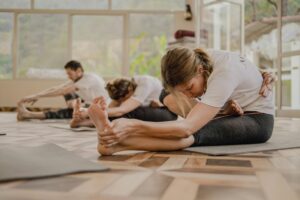
5. Seated Forward Bend (Paschimottanasana)
Sit on the mat with your legs extended in front of you. Inhale to lengthen your spine and exhale to fold forward over your legs. This pose helps to stretch the spine, shoulders, and hamstrings, promoting relaxation.
6. Legs Up the Wall (Viparita Karani)
Lie on your back and extend your legs up the wall. This restorative pose helps to reduce swelling in the legs, calm the nervous system, and promote circulation.
7. Reclining Bound Angle Pose (Supta Baddha Konasana)
Lie on your back with the soles of your feet together and knees falling open. Place a bolster or pillows under your knees for support. This pose gently opens the hips and promotes relaxation.
8. Supine Twist (Jathara Parivartanasana)
Lying on your back, draw your knees into your chest and gently lower them to one side while extending your opposite arm. This gentle twist helps to release tension in the spine and promote digestion.
9. Savasana (Corpse Pose)
Conclude your practice with Savasana. Lie flat on your back with your arms at your sides, palms facing up. Focus on your breath, allowing your body and mind to fully relax and absorb the benefits of your practice.
Breathing Techniques for Deeper Relaxation
Incorporating breathing techniques into your evening yoga routine can enhance relaxation. Try the following pranayama exercises:
- Ujjayi Breath: Inhale deeply through your nose, slightly constricting the back of your throat to create a gentle “ocean” sound. This breath helps to calm the mind and promote focus.
- Nadi Shodhana (Alternate Nostril Breathing): Use your thumb and ring finger to alternate closing one nostril while breathing through the other. This technique balances the left and right sides of the brain, promoting relaxation and mental clarity.
Conclusion
A transformative evening yoga sequence is a powerful tool for reducing stress, enhancing relaxation, and preparing for a restful night’s sleep. By incorporating this practice into your routine, you can promote physical and mental well-being, leading to a more balanced and fulfilling life. Remember to listen to your body, practice with intention, and enjoy the journey towards serenity and relaxation.
#ChatGPT assisted in the creation of this article.