Yoga, a practice with ancient roots, offers a wide range of physical and mental benefits. Whether you’re looking to improve flexibility, reduce stress, or enhance overall wellness, yoga provides accessible options for practitioners at every level. For beginners, starting with foundational poses can help build a strong base for a lifelong practice. This article will guide you through some of the top beginner yoga poses that foster optimal wellness.
Mountain Pose (Tadasana)
Mountain Pose, or Tadasana, serves as the foundation for all standing poses. It’s a great starting point to develop awareness of your body’s alignment and posture.
How to Practice
- Stand with your feet together or hip-width apart.
- Press evenly through your feet and engage your thighs.
- Extend your arms alongside your body, palms facing forward.
- Keep your spine long, chest open, and shoulders relaxed.
- Focus on your breath, maintaining calm and steady inhales and exhales.
Mountain Pose helps improve posture, balance, and awareness, setting the tone for your practice.
Downward-Facing Dog (Adho Mukha Svanasana)
Downward-Facing Dog is an iconic yoga pose that stretches and strengthens multiple parts of the body. It’s a versatile pose that can act as both a resting and strengthening position.
How to Practice
- Start on your hands and knees, with wrists aligned under shoulders and knees under hips.
- Tuck your toes and lift your knees off the floor, straightening your legs.
- Push your hips upward and back, forming an inverted “V” shape with your body.
- Keep your head between your arms, aligning your ears with your upper arms.
- Press your heels toward the floor and spread your fingers wide for stability.
This pose stretches the hamstrings, calves, and spine while strengthening the arms, shoulders, and legs.
Child’s Pose (Balasana)
Child’s Pose is a gentle resting pose that provides a deep stretch to the back and hips, promoting relaxation and stress reduction.
How to Practice
- Kneel on the floor with your big toes touching and knees spread apart.
- Sit back on your heels and extend your arms forward, lowering your torso between your thighs.
- Rest your forehead on the mat and relax your shoulders.
- Breathe deeply, allowing your body to relax and release tension.
Child’s Pose is perfect for resting between more active poses, providing an opportunity to focus inward and calm the mind.
Warrior I (Virabhadrasana I)
Warrior I is a powerful standing pose that builds strength and stability in the legs, core, and arms, while also opening the hips and chest.
How to Practice
- Stand with your feet about hip-width apart and step your right foot back, keeping your left knee bent.
- Turn your right foot slightly outward and align your heels.
- Raise your arms overhead, keeping your palms facing each other.
- Square your hips and shoulders toward the front of the mat.
- Gaze forward or slightly upward, maintaining a strong and steady breath.
This pose strengthens the legs, opens the hips, and improves focus and concentration.
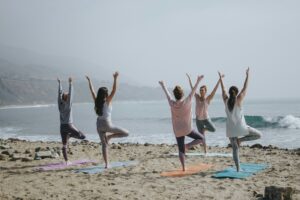
Tree Pose (Vrksasana)
Tree Pose is a balancing posture that fosters concentration and mental clarity. It helps improve balance and stability while strengthening the legs and core.
How to Practice
- Stand in Mountain Pose, grounding through your left foot.
- Lift your right foot and place the sole against your left inner thigh or calf (avoid the knee).
- Bring your hands together in front of your heart or extend them overhead.
- Find a focal point to maintain your balance and breathe steadily.
Tree Pose enhances mental focus, balance, and stability, making it an excellent addition to your practice.
Cat-Cow Pose (Marjaryasana-Bitilasana)
Cat-Cow is a gentle flow between two poses that increases flexibility in the spine and helps warm up the body.
How to Practice
- Start on your hands and knees, with wrists under shoulders and knees under hips.
- Inhale and arch your back, lifting your head and tailbone (Cow Pose).
- Exhale and round your spine, tucking your chin and tailbone (Cat Pose).
- Continue flowing between Cat and Cow with your breath.
This sequence helps improve spinal flexibility and can alleviate back tension.
Bridge Pose (Setu Bandhasana)
Bridge Pose is a backbend that strengthens the back, glutes, and legs while opening the chest and shoulders.
How to Practice
- Lie on your back with your knees bent and feet flat on the floor, hip-width apart.
- Press your feet into the mat and lift your hips toward the ceiling.
- Interlace your fingers beneath your lower back and press your arms into the floor.
- Keep your thighs parallel and your chin slightly tucked.
Bridge Pose can energize the body and reduce stress, making it a valuable addition to any practice.
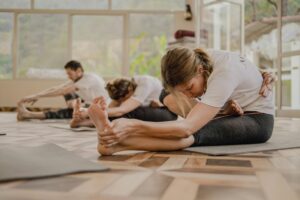
Seated Forward Bend (Paschimottanasana)
Seated Forward Bend is a calming pose that stretches the spine, shoulders, and hamstrings, promoting relaxation and stress relief.
How to Practice
- Sit with your legs extended in front of you, keeping your spine straight.
- Inhale and lengthen your spine, reaching your arms overhead.
- Exhale and fold forward from the hips, reaching toward your feet.
- Hold your feet or shins, keeping your spine long.
This pose encourages introspection and can help calm the mind and reduce fatigue.
Conclusion
Incorporating these beginner yoga poses into your routine can significantly enhance your physical and mental wellness. Each pose offers unique benefits, from improving flexibility and strength to promoting relaxation and mental clarity. As you practice, remember to listen to your body and modify poses as needed to suit your individual needs. With regular practice, you’ll build a strong foundation for continued growth and development in your yoga journey.
Starting with these poses provides a comprehensive introduction to the world of yoga, encouraging a balanced approach to physical and mental well-being. As you gain confidence and proficiency, you can explore more advanced poses, deepening your practice and reaping even more benefits from this ancient discipline.
#ChatGPT assisted in the creation of this article.